Jonny Reneau Construction, LLC

Which Roofing Type Is Right for You?
A Guide to Your Roofing Options


Choosing a new roof is a big decision, and with so many roofing materials available, it can be hard to know where to start. The right roof isn't just about appearance. Your property, roof design, budget, maintenance preferences, and long-term goals can all play a role in determining which roofing system makes the most sense.
At Jonny Reneau Construction, we offer several roofing options for homes, businesses, garages, and other structures. Here's a simple breakdown to help you understand the differences and narrow down which option may be right for your project.
Asphalt Shingles
Best for: A versatile, budget-friendly roofing option
Asphalt shingles are one of the most common choices for residential roofing, and for good reason. They provide a great balance between affordability, durability, and appearance.
They're available in a wide variety of colors and styles, making it easy to find an option that complements your home. Asphalt shingles can also be a good choice when you're looking for dependable protection without the higher upfront cost of some metal roofing systems.
Why choose asphalt shingles?
-
Cost-effective
-
Wide variety of colors and styles
-
Works well with many home styles
-
Straightforward to repair and replace
-
A practical all-around roofing choice
For many homeowners, asphalt shingles offer the combination of performance, appearance, and affordability they're looking for.

Rubber Roofing
Best for: Flat and low-slope roofs
Not every roof is designed for shingles. Flat and low-slope roofs require a roofing system that can provide dependable protection where water doesn't shed as quickly as it does from a steeply pitched roof. Rubber roofing uses a flexible membrane to create a water-resistant surface across the roof. It's commonly used on flat and low-slope areas and can provide long-lasting protection when properly installed and maintained.
Why choose rubber roofing?
-
Well suited for flat and low-slope roofs
-
Flexible
-
Water resistant
-
Relatively low maintenance
-
Provides dependable protection in applications where shingles may not be appropriate
If your home or building has a flat or low-slope section, rubber roofing may be one of the options worth considering.
Stone-Coated Steel Roofing
Stone-coated steel combines the strength of metal roofing with designs made to resemble more traditional roofing materials. Rather than having the smooth appearance many people associate with a metal roof, stone-coated steel is covered with stone granules that give the surface texture and dimension.
We offer stone-coated steel in shingle, shake, and tile styles, allowing you to choose the appearance that best complements your property.
Stone-Coated Shingle
Best for: Long-lasting durability and added protection from the elements

Stone-coated shingles provide the familiar appearance of traditional shingles while offering the strength and longevity of steel underneath.
This can be an excellent option when durability is a priority, but you still prefer a more traditional shingle-style roof.
Why choose stone-coated shingles?
-
Durable steel construction
-
Long-lasting
-
Resistant to many common weather-related impacts
-
Traditional shingle appearance
-
Lower maintenance than some traditional materials
Repair or Replace?
How to Know What Your Roof Really Needs
Is It Time for a Roof Repair or a Full Replacement?
Finding damage on your roof can be stressful, especially when you're unsure whether it can be repaired or if it's time for a complete replacement.
The good news is that not every roofing problem means you need a new roof. Your roof's age, the amount of damage, previous repairs, and signs of water intrusion can all help determine the best solution.
Quick Answer: If your roof has minor, isolated damage and is otherwise in good condition, a repair may be all you need. If the damage is widespread, the roof is showing significant signs of aging, or you've needed repeated repairs, replacement may be the better long-term option.
Here are five things to consider when deciding what your roof really needs.
Consider the Age of Your Roof
Age is an important factor when evaluating your roof, but it shouldn't be the only factor.
Many properly installed asphalt shingle roofs can provide around 20–30 years of service, but the actual lifespan of a roof can vary. The type and quality of the materials, installation, ventilation, weather exposure, and maintenance can all affect how quickly a roof ages.
If your roof is relatively new and has damage limited to one area, repairing that area may make sense. If the roof is older and you're also noticing widespread wear, leaks, or other problems, it may be time to consider replacement.

How Extensive Is the Damage?
Not every damaged shingle calls for an entirely new roof. One of the biggest things to consider is how much of the roof is affected.
A repair may be appropriate when you're dealing with:
-
A small number of damaged or missing shingles
-
Minor damage limited to one area
-
A localized flashing problem
-
A leak with an identifiable and repairable source
A replacement may be worth considering when there is widespread shingle deterioration, damage in multiple areas, significant storm damage, or problems extending into the materials beneath the shingles. The important thing is looking at the condition of the entire roof, not just the most noticeable damaged area.
Localized Flashing Problem
Illustrative Example: Damaged, loose, or deteriorating flashing around chimneys and other roof joints can create an opening for water to enter.

Have You Needed Multiple Repairs?
One roof repair doesn't necessarily mean there's a larger problem. However, if you're repeatedly fixing leaks or discovering new areas of damage, it may be worth taking a closer look at the roof as a whole.
Repairs typically cost less upfront than a full replacement. But if you're continually paying to repair an aging roof, those costs can add up over time.
Consider both the immediate repair and the overall condition of the roof when deciding which option makes the most sense long term.
Watch for Signs of Water Damage
Some roofing problems aren't easy to see from outside.
Keep an eye out for signs inside your property, including:
-
Water stains on ceilings or walls
-
Damp or damaged insulation
-
Moisture in the attic
-
Mold or mildew associated with moisture
-
Damaged or deteriorating roof decking
A small leak shouldn't be ignored. Over time, water intrusion can affect insulation, ceilings, roof sheathing, framing, and other materials.
It's also important to remember that the location of a water stain doesn't always tell you exactly where the water is getting in. Water can travel before becoming visible inside, which is one reason finding the source of a roof leak can be tricky.
Water Stains on a Ceiling
Illustrative Example: Brown or yellow discoloration on a ceiling can be a sign of water intrusion. The visible stain may not be directly below the source of the leak, so it's important to have the cause identified.
Get a Professional Inspection
Sometimes it's difficult to tell how serious a roofing problem is from the ground, or even from inside your property.
A professional can take a closer look at the roofing materials, flashing, areas around roof penetrations, and other components to determine whether you're dealing with an isolated problem or something more extensive.
Most importantly, don't assume that visible damage automatically means you need an entirely new roof. An inspection can help you understand the condition of your roof and determine whether repair or replacement makes the most sense.
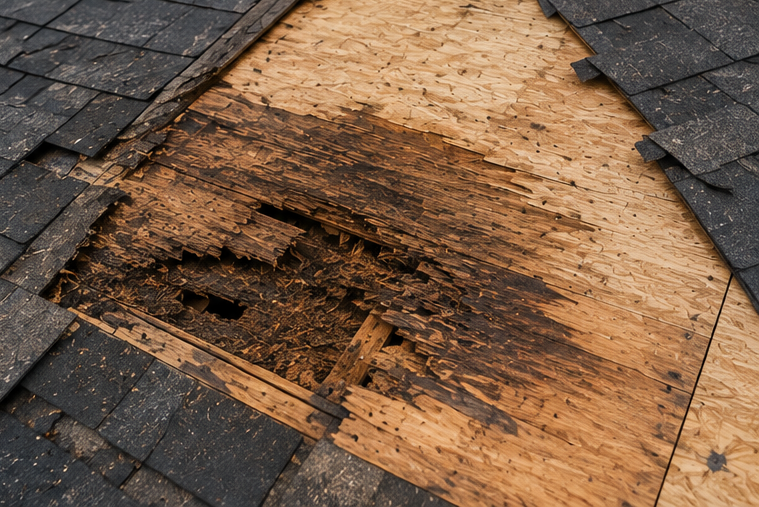
Damaged Roof Decking
Illustrative Example: Prolonged moisture exposure can cause roof decking to deteriorate, soften, or rot. Because decking is located beneath the roofing materials, damage may not always be visible from the outside.
Repair or Replace? Start With an Inspection
There's no one-size-fits-all answer.
A relatively small problem on an otherwise healthy roof may only require a repair. Widespread damage or recurring problems on an aging roof may make replacement the better long-term investment.
Either way, addressing roofing problems early is important. What begins as a small issue can become a larger and more expensive problem when it's left unaddressed.
Not Sure What Your Roof Needs?
Whether you're dealing with a small repair or wondering if it's time for a replacement, Jonny Reneau Construction is here to help.
We offer FREE estimates to help you understand your roof's condition and recommend the solution that's right for your property.
5 Signs Your Roof May Need Attention
Is Your Roof Ready for Wisconsin's Weather?
From heavy snowfall and ice in the winter to spring storms, hail, strong winds, and summer heat, Wisconsin weather puts your roof through a lot. While your roof is built to protect your home, everyday wear and tear can eventually lead to problems that aren't always obvious from the ground.
The good news? Catching roofing issues early can often help prevent more extensive damage to your home.
Here are five common signs your roof may need professional attention:

1. Missing or Damaged Shingles
High winds and severe storms can loosen, crack, or completely remove shingles. Even a few missing shingles can expose your roof to moisture, increasing the risk of leaks and further damage.
What to look for:
-
Missing shingles
-
Cracked or broken shingles
-
Shingles lying in your yard after a storm
2. Curled, Cracked, or Buckling Shingles
As shingles age, they naturally begin to deteriorate. Curled or buckling shingles may no longer provide the protection your home needs, allowing water to seep beneath the roofing material.
This is especially common on older roofs that have been exposed to years of Wisconsin's changing seasons.
3. Granules Collecting in Your Gutters
If you notice what looks like coarse black sand collecting in your gutters or at the bottom of your downspouts, those are likely asphalt shingle granules.
These granules help protect your shingles from the sun's UV rays and harsh weather. As they wear away over time, your roof becomes more vulnerable to damage.
4. Water Stains on Your Ceiling or in Your Attic
A roof leak doesn't always announce itself with water dripping from the ceiling. Sometimes the first signs are subtle discoloration, stains, peeling paint, or damp spots in your attic.
Even a small leak can lead to mold, wood rot, or damage to insulation if left untreated.
5. Your Roof Is 20 Years Old or Older
Many asphalt shingle roofs are designed to last around 20–30 years, depending on the quality of the materials, installation, ventilation, and the weather they experience.
If your roof is approaching or beyond 20 years of age, it's a good idea to have it inspected, even if it doesn't appear to have obvious damage.
Don't Wait Until a Small Issue Becomes a Big Repair
Your roof is one of the most important parts of your home, and catching problems early can help protect your investment.
If you've noticed any of these warning signs, or if your roof has recently been through severe weather, it may be time for a professional inspection.
At Jonny Reneau Construction, we're committed to providing honest recommendations and quality workmanship. If you have questions about your roof or would like to schedule a free estimate, we're here to help.
Protect your home today so you can have peace of mind tomorrow.